
For years, SIEM has been one of those technologies that looked good in theory but was genuinely hard to build a profitable managed service around. Deal-by-deal discount negotiations, licensing structures built for enterprise resale rather than recurring managed services revenue, and no predictable floor on margin. For many MSPs, the math just never worked.
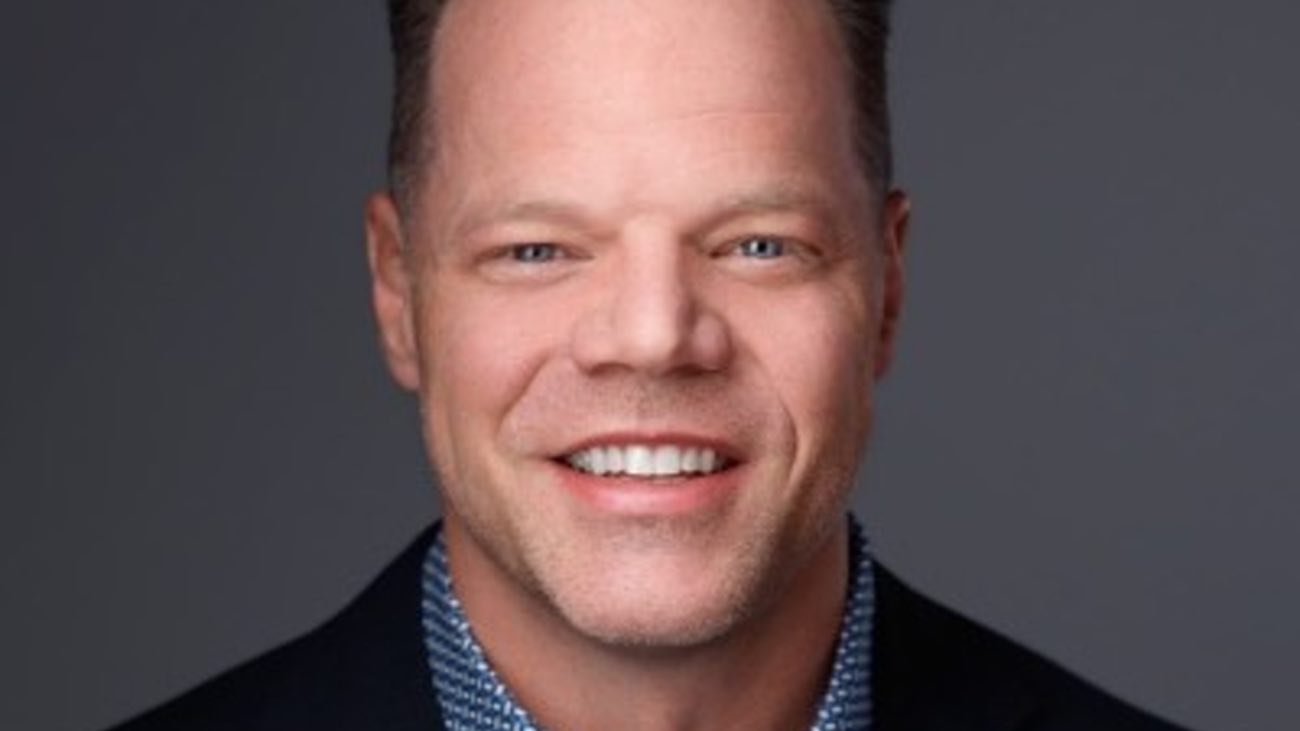
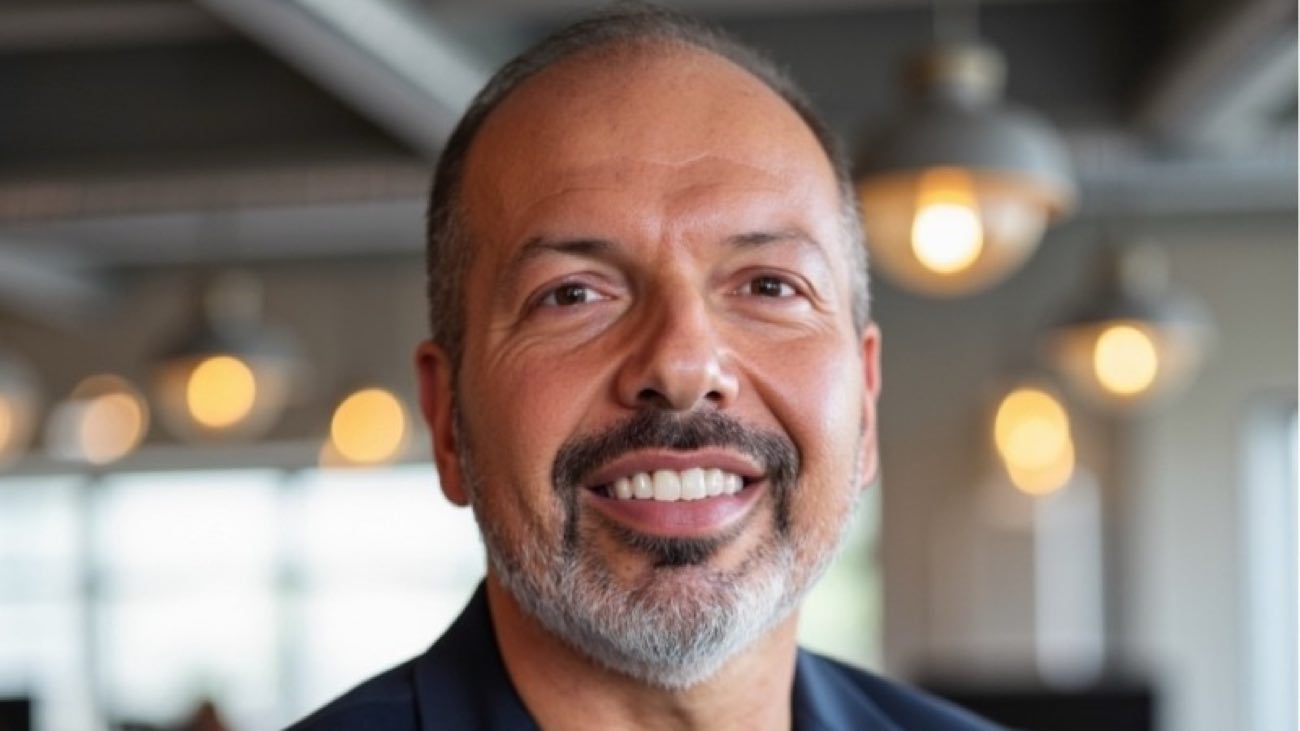
Exabeam – the combined company formed from the merger of the original Exabeam and LogRhythm – is making a direct play to change that. Global channel chief Craig Patterson and senior director of service provider alliances Peter Stratis join In The Channel to walk through the new MSSP commercial framework inside the recently launched APEX Partner Program. Two new licensing pathways: a single-pool capacity model for high-volume, multi-tenant environments serving SMB and mid-market clients, and a federated subscription model that isolates customer environments for compliance and data sovereignty requirements. For Canadian MSSPs navigating PIPEDA, OSFI E-21, or Protected B, that second model is the one to pay close attention to.
The conversation also covers Sherpa, Exabeam’s new AI-powered partner enablement platform – a move away from the traditional LMS toward an always-on coaching tool that can join partner sales calls in real time – and Agent Behavior Analytics, Exabeam’s new capability for detecting malfunctioning, misaligned, and subverted AI agents inside customer environments, included at no additional cost.
The standout line from Peter Stratis – who called this his first-ever podcast appearance – is the one worth writing down: “We treated our service providers like resellers, unfortunately.” The new framework is a direct acknowledgment of that history, and an attempt to rebuild the commercial relationship from the ground up.
Podcast: Play in new window | Download
Subscribe: Apple Podcasts | Spotify | Amazon Music | Android | iHeartRadio | Youtube Music | RSS
Read Full Transcript
Robert Dutt: Hello and welcome to In The Channel from ChannelBuzz.ca, bringing news and information to the Canadian IT channel community for the last 16 years. I’m Robert Dutt, editor of ChannelBuzz.ca and your host for the show. If you’ve been in the channel for any length of time, you know that SIEM has always been one of those technologies that seems great in theory but has been genuinely hard to build a profitable managed service around. Licensing models that weren’t built for multi-tenancy, unpredictable costs, discount structures that made margin planning more of a guessing game than a business model. A lot of MSPs have looked at the security operations space and quietly backed away for exactly those reasons. Exabeam, the combined company that emerged out of the merger of Exabeam and LogRhythm, is making a direct play to change that. They have overhauled their channel program into what they’re calling the APEX Partner Program and at the centre of it is a new commercial framework built specifically for managed security service providers. Two distinct pathways: one for high-volume multi-tenant environments and one built with compliance and data sovereignty in mind. For Canadian MSPs navigating PIPEDA, OSFI E-21 and Protected B requirements, that second lane is worth paying close attention to. I’ve got two Exabeam executives here to walk us through it. Craig Patterson is Exabeam’s global channel chief and Peter Stratis is the senior director of service provider alliances, the person who’s been working directly with MSSPs to build this out from the ground up. Let’s get right into it. My chat with Craig Patterson and Peter Stratis.
Gentlemen, thank you for taking the time.
Craig Patterson: Thank you, Robert. Super excited to be on here with you today, my friend.
Peter Stratis: Thank you.
Robert Dutt: Craig, can you just kick us off with a quick version of where Exabeam sits right now? You know, you guys went through a significant merger with LogRhythm not that long ago. Now you’re pushing an updated partner program. For solution providers who maybe haven’t been following closely, what does the combined company look like from a channel perspective?
Craig Patterson: The short answer, my friend, is that we’re sitting in an amazing place. We’re absolutely in a good place positioning to really drive value to our partner community. And so to give you a little more context around that, like you asked, we’ve spent the last 12 months really kind of rethinking, reimagining the whole partner ecosystem in a way to create value for all of our partners globally. And so there was a number of things we went through over the last 12 months. We spent a lot of time really going to this assessment loop, understanding everybody’s perspective. So we did that by having very strategic conversations with our top-tier partners. We did some survey work. We looked at the broad landscape in terms of the trends that the partners are really looking for in these modern channel programs. So all of that really became this assessment loop. The output of that is that really became the foundation for what we built here with APEX. And so with APEX, the Exabeam APEX Partner Program, what you have here is you have a program that’s really centered on value that’s really focused on solving a problem that exists in our market today around enablement. And so when you think about enablement today, I’ve written a lot of articles on this. Most enablement programs really don’t drive to the level of outcome that companies are looking to have. Outcomes like conversion rates, outcomes like time to first deal, outcome rates like retention rates, all these things. And so what we’ve done is we’ve really focused on enablement as the key catalyst to really drive value to our partners. And so with that, we’ve launched new enablement programs really with a focus on increasing their competency level so we can align to those outcomes we’re looking to have with our company’s operating plan. And so there’s a lot of thought that’s got into this. The short answer is we have a program that’s built on value. It aligns to where the market is going and what partners are really asking for.
Robert Dutt: Peter, your title as senior director of service provider alliances is a pretty specific role. Can you tell us a little bit about what that looks like sort of on a day-to-day basis and the big problems that you’re focused on?
Peter Stratis: Sure thing. Thanks, Robert. Well, I’ve been with Exabeam for about eight years now and service providers have always been a key component of not only our channel strategy, but our go-to-market and just from our net new revenue perspective. After our merger with LogRhythm, that actually continues and if anything, it’s only been more emphasized because both from an on-prem and from a cloud perspective, we see the MSSPs being a strong driver of that strategy of our go-to-market. So over the last eight years, we’ve seen that trend of not only on net new revenue, net new logos being a major part of our business, but then how do, to Craig’s point, how do we support them? To be quite honest, in the past, it was quite difficult. We really didn’t have any kind of structured pricing for these partners. It was, to say the least, it was more of a resale program that had some discounts tied to it. So through Craig’s efforts, through our whole surveys and our intent to really go after this market and treat them the way they should be treated, he mentioned that we did these surveys. We asked internally, what do you look for in a service provider partner? We asked externally what these partners were looking for from us. And that’s when in building the APEX Partner Program here at Exabeam, we also took into account what service providers would look for in a new partner program. So that’s everything from pricing to support. Craig mentioned enablement. Enablement is a huge part of that, where they felt in the past they were just lumped up as just a regular partner. Now we have supported APIs, documented APIs that most, if not all, of our partners are using as part of their foundation for their services. So we’ve really come a long way and continue actually to build upon that, as you’ll see throughout 2026 and beyond.
Robert Dutt: Okay, let’s get into the framework itself. You guys positioned it at launch as solving commercial and operational friction for MSSPs. Curious, what did you hear that friction looked like in practice? What were MSSPs telling you was broken or was a big challenge?
Craig Patterson: Yeah, so I’ll take a stab at this and I’ll let Peter give more context. So a lot of this came out during that assessment phase. Robert, we’re talking to the MSSPs globally. I’m like, what’s working? What’s not working? What would they like to see incorporated into the MSSP program 2.0? So a lot of the feedback we heard was really around the flexibility. Being able to have a license that is catering to all the customer demand they have beneath. So it’s really giving them the flexibility to buy that one license and carve it up as they see fit. And giving them more flexibility on the commercial terms. That was a lot of the commentary we heard. The other thing we heard was really they wanted more value as it leads to the enablement side. So obviously getting them enabled on the pre-sales side, but more importantly on the post-sales side. So they could actually drive those implementations, drive the management and really help those customers create a lot of value. And so I think those were kind of the big levers that I heard from those assessments. And then in practice, Peter can give you some more context in terms of how we’re putting all this together.
Peter Stratis: Yeah, thanks Craig. A lot of what we heard from the service provider community in the past was friction. So when they’re trying to price out their services and our product and etc., they were seeing friction at onboarding. They were seeing friction in trying to predict their margin on deals. As mentioned, not airing any dirty laundry here. It was more like a resale program. So we gave discounts and there were very opportunistic discounts on a deal-by-deal basis. So they didn’t build predictable service models around it in the past. And then you always hear the buzzword, multi-tenancy. We kept on getting asked about our multi-tenant roadmaps, etc. We’re looking at this framework as a way of solving for that. We continue to make feature enhancements into the platform that will strive for that multi-tenancy. But the way we’re solving for it is by these two pathways. One is that single license, pooled capacity, data segregation model. And the other is that federated workflow that we announced where it’s more for, whether you’re within data sovereignty, if in different regions or just different use cases from a compliance perspective, whether it’s healthcare or finance, and you have to keep these environments isolated. We have a plan and we worked with our MSSPs specifically to have these kind of pathways. So we heard from our MSSPs and we actually developed these two pathways with them in mind. So they were in the design phase and in the rollout phase for both federated and the single pool capacity.
Robert Dutt: The federated model is such an interesting one, I think, for the Canadian market, specifically data sovereignty, huge topic. And there are specific compliance requirements, PIPEDA, OSFI E-21, Protected B status. It means that a lot of Canadian MSSPs can’t just kind of throw everything into one pool. Was that the sort of thing that was explicitly on the radar when you built this out or a happy coincidence of the architecture and the feedback that you heard along the way?
Peter Stratis: It’s actually a little of both, right? So it just so happened to be the maturity of our platform. Even from our Exabeam New Scale platform, we went from an on-prem hardware appliance way back in 2012, to our version 1.0 was a SaaS product, to our native cloud. It was always a single-tenant solution. So it worked well for certain service providers that had the capacity. They had their APIs and their own platforms that could manage this solution. As you heard more and more about multi-tenancy and the need for data sovereignty and all that, we still had a big part of our MSSPs were asking for this single license pooled capacity. So we structured it in a way where for midsize organizations or even some small, medium business, you still have that single pool capacity using data segregation. You lose some of the customization, but you could actually solve for a lot of those customers in that model. And then you have another plan with the federated. So the more mature MSSPs are running both models in some capacity. They could still run that single license for their SMB play. And then for either large enterprise or very compliance-driven customers that want those isolated environments, they have that flexibility. And that’s what we built a framework around. Obviously, that’s one point of feedback that sort of directly informed the framework.
Robert Dutt: You guys have said that this whole thing was built, as you said, with direct collaboration with your MSSP partners rather than kind of coming down on high. I’m curious along with what you’ve touched on already, what actually changed as a result of going through that process? What did you go in thinking you’d build and how did it come out differently because of what partners told you along the way to building it?
Craig Patterson: Yeah. So I think there’s a lot of things that have been addressed. Obviously, the packaging and the commercial aspects as Peter was describing, but think about some of the fundamental problems in terms of partners want this path to profitability, right? Really understanding how they can create margin. That was one thing. Another path is like, how do I become enabled with Exabeam? And how do I stay informed in terms of where you’re going? Another problem we wanted to solve. So I think it’s a lot around the financial aspects of doing business with us. A lot of it’s around becoming enabled, becoming more knowledgeable on all the new features and releases that we’re dropping. And so those were some of the big fundamentals that we wanted to solve in the APEX framework. And then beneath that, obviously, is the whole MSSP play. And that’s what Peter’s been talking about. So you can probably give a little more context on that.
Peter Stratis: Yeah. As mentioned, there is no one-size-fits-all. So the feedback we were getting was obviously their security platform was important to them. Some of them had an in-house platform they built on their own. And there’s ways of differentiating. So basic SIEMs are just going after alert monitoring. So how can I differentiate my service if I’m a service provider? Well, there’s ways of going to market, but also there were things we needed to do in the back office from a platform perspective to make those possible. So making our behavioral analytics available in these models so they can actually differentiate their services. As I said, we have a history of actually adding features quarter-over-quarter, month-over-month. So that’s not stopping. We didn’t announce necessarily multi-tenancy to the world. We announced a commercial framework for that. So you’ll continue to see on a month-to-month, quarter-over-quarter basis, features added to support not only the commercial framework, but the underlying platform to make it easier for service providers to add that operational efficiency, to add those differentiators from a product portfolio as well.
Robert Dutt: Let’s talk about the economics underneath there. You use the term predictable margins as a phrase that shows up in the messaging. SIEM has historically been a tough service to make money on. Licensing models that didn’t fit the managed services motion, unpredictable costs on data ingestion, those sorts of things. What specifically changes for an MSSP’s P&L under the framework?
Craig Patterson: Yeah. So I think there’s really two components here. The first is the whole financial package associated to the MSSP partners. And the second is the discounting framework. And so let’s maybe start with the discounting framework. One of the observations that we made during this whole assessment phase was the vast majority, Robert, of all of our deals were flowing through this non-standard process, which means the discounts that were aligned to the traditional framework were not putting the MSSP partners in a position to actually transact. And so what we did is we went through and we re-looked at the discounting framework and sort of realigned it based upon our actual data points. We looked at the last 12, 24 months, the discounts that were being derived to actually transact. And we sort of rebuilt the entire discounting framework for our company in a way that really empowers the MSSP partners now to have enough discount to actually transact without going to this non-standard queue. So what does it mean? Well, we really kind of flipped the script. Instead of 80% being non-standard, we believe 80% will flow through the standard process now because we’ve built the discounts in a way to align with what the market is looking for. That’s kind of the key component number one. And then as it relates to the discounting side, we reimagined how those discounts are calculated. And so now you kind of have your standard program discount. So that’s based upon your tier. So top-tier MSSP partners get the highest level discount. The second is deal registration. Obviously, they put the deal reg in that ties to a discount. Those are both standard common things. But what’s new, which is what you care about. What is new? Well, we’ve aligned the third discount based to their competency level. And so we measure that based upon certifications. And so if you think back to those choose-your-own-adventure books as a kid, we’re really giving the partners their own choose-your-own-adventure. And if they want to drive to the highest level discount, well, simply, MSSP partners got to go take all of our certifications, pre-sales and post-sales, so they have the highest level of competency to drive our services in the market. And our thesis around that is partners that have higher certifications, they’re going to be more active, they’re going to be more interested, they’re going to drive more pipeline. And if we do this the right way, Robert, they’re actually going to convert at a higher percentage, we’re going to see shortened sales cycles, all of which align to the operating plan of our company. So it’s kind of those two fundamental things that were addressed through that process. And then I’m sure Peter can fill in the detail for you.
Peter Stratis: Yeah, if I can actually elaborate on that. Thanks for that, Craig. And just some historical context, Robert, as mentioned in the past, we treated our service providers like resellers, unfortunately, so it was very deal-specific in terms of what they were getting on a deal-by-deal basis from a discount. So the economics of it was they really couldn’t rationalize their margin predictability on an overall services basis. And you know, different regions go to market different ways. In Europe, Asia, Latin America, predominantly, it’s all SIEM as a service and MSSP owns the license. In the Americas, both US and Canada, we saw a lot of proliferation in the past of customer-owned licenses. So the MSSP would resell the license, and consequently, just provide managed services wrap on top of that. Not only do we see more of that MSSP-owned model now where it’s SIEM as a service in the US and Canada. So it’s proliferated itself throughout all the regions. Now with these frameworks, we actually are able to build these economics, the margin predictability, as Craig mentioned, because now they know as a standard, what they’re going to be selling for. So especially as we do this federated model, and even the single license, you know what your price is across the board, you know what license you’re buying, you know what price you’re buying it for, you know, the more customers you add to these models, the more your profitability will increase as well. So it continues to grow from a pure profit play. Partners want to know what their margin would be as their customer licenses grow. And this is exactly what the framework did.
Robert Dutt: This is sort of a broader question around MSP/MSSP distinctions as opposed to directly about the framework. But there’s a distinction worth drawing between an MSP trying to bolt a security practice onto the existing managed services business and the established MSSP who’s been at this for a year or who has built it up. Are those two different conversations for you? And if so, what are the different entry points and care-abouts?
Peter Stratis: So it’s interesting, not only because of this announcement, even prior to it, the announcement of the APEX Partner Program here at Exabeam caused a lot of interest from partners and different kinds of partners. The traditional MSP, when inquiring, it was kind of hard when we were vetting them that they had no security practice of their own. So oftentimes they would actually outsource that security to an MSSP, to a classic MSSP, or maybe just resell services from those other organizations. We see that, we see a lot of interest from MSPs with that. And we see VARs or resellers come to us that want to build managed service practices as well. So we look at both of these in two different ways. One, how can we take care of these partner inquiries now, and then how can we grow with these organizations? So both MSPs and resellers that are interested in managed services now, our first inkling is to try to introduce them to our current managed service base. These people have the experience, they have the certifications, they have the technical knowledge. We’ve seen that move from a lot of MSP partners actually having channels of their own. So they actually sell their MDR or MSSP services through a channel of resellers or MSPs. But then if that’s our first step with these type of partnerships, then it’s like, how can we grow within your organization? How can we help you get the technical skills required? Because for a true MSP to have success, not only in SIEM, but just security as a service, you can’t just train one or two people, you need the 24-by-7 support, you need the tier one and tier two level of support services as well. So you have to grow your organization or outsource it to people that are already prepared to handle that. So that MSP play, we actually see it more and more going towards our current managed security service providers and getting that as a resource.
Craig Patterson: Just to add a little more context to that too. So this actually becomes a very interesting point for the distributors worldwide as well. Because a lot of what they provide in terms of value is helping those MSPs in terms of deployment and management of the services. And so we’ve gone through the vetting process globally, looking at all of our distributors and we’ve handpicked our strategic distributors around the world. So if we have MSPs that want to come into the program, but they’re not ready on that post-sale side, well, guess what? That can become the role of the distributor. And secondarily, this is where the enablement really comes into play as well. And so that’s why we’ve built very specific paths on enablement, pre-sales and post-sales, where partners can choose their own adventure. “Hey, if I want to get going on the pre-sale side, well, guess what? I can simply resell.” Or, “Hey, I want to really start focusing on the post-sales services implementation.” I can start to take the enablement around those courses to become more of an expert to really give me those new capabilities. And so there’s a whole conversation around what we’re doing on enablement with our brand new Sherpa that’s really given a lot of these partners those capabilities.
Robert Dutt: On the note of Sherpa, an AI-powered tool for partners, it’s essentially a virtual channel account manager in terms of enablement, onboarding, that sort of thing, especially for an MSSP who’s new to SIEM. How does it change the friction of getting started with Exabeam as their platform?
Craig Patterson: You’re going to love this. You’re going to love this. So we’ve sort of reimagined all of the enablement. Again, when you look at traditional enablement, it’s like most enablement is built in these LMS platforms. Like, “Hey, partner, go log on to this LMS platform, get your certification, and then we expect you to actually know what the hell you’re doing.” Reality is that’s not what happens. They log on to the LMS platforms. They fast-forward as quickly as they can to the end. They turn the volume down. And then when the quiz comes, they use AI to answer the questions. And so they just find a way to get the certification. The reality is none of that helps them be better in life or actually raise their competency. And so that’s a problem we took on head-on with Sherpa. And so Sherpa was built in a way to really change the way partners learn with the whole goal of raising their competency level so they can be better on the market. And there was really like three use cases we were trying to solve with the emergence of Sherpa. The first is like you think about this global ecosystem that Peter and I have. We have 3000 partners. The partner ecosystem looks different. We have VARs. We have MSPs. We have MSSPs. We have distributors. We have the trusted advisor market as well. All of them have different needs in terms of where they are from a learning perspective. And so the first use case, Robert, is simply like a tool to be able to ask questions. What are the use cases? How do I position this? Why is SIEM or UEBA better than the competition? Just an always-on tool for partners to ask questions. And so that was kind of use case one. And then the cool thing around that is you think about the ecosystem being very global in nature. The other problem with LMS platforms is I’ve got partners in Japan. Well, that means the LMS platform they log on to needs to be able to talk to them in Japanese. And so the beauty with Sherpa, it does all the translation for us. And we’ve got 15 plus languages that are now live in Sherpa. Partners in Japan are talking to it. We got partners in India and all over the world really asking questions in terms of how we position our services. And that integration can be done by just logging on to our portal. You’ll see a bot pop up. They can just simply ask a question. It integrates in Teams, integrates in Slack. So that was use case number one. Use case number two was we reimagined the whole enablement certification platform. And so it’s a very dynamic learning experience. And so the way it happens is you log on, there’s a topic that you like, you click on that, you start learning, it asks you questions, it asks you to position services, and then you record your answer to how you’re actually positioning those services or the features. And it gives you feedback like, “Robert, you did really good on this aspect, but next time you should use this and this.” Or, “Robert, if you’re talking to a customer that’s in this vertical, you should talk about this use case because that’ll help resonate.” And so the whole certification process has been rebuilt and that’s the second use case. The third use case, this is a game changer. And this really goes to your question. And it’s an always-on coach. And so partners are now able to invite Sherpa to calls. And so as they’re having those conversations with customers, and the customer may say something or give them an objection, well, in the background, Sherpa will give them the answer to that objection and say, “Customer said this, talk to them about this.” Or, “Have you shared this new feature that was just released in the quarterly launch?” So it’s like this always-on coach, always-on assistant to really give them what they need. And then we’re putting it on this innovation roadmap. And so every single quarter, we’re launching new innovation in Sherpa. As an example, we’re now launching our LinkedIn integration. So if you’re an MSSP partner, you log on to Sherpa, you’re connected to LinkedIn, it’s going to ask you, if Sherpa can look through your network to find customers that may be a good fit for our services. And then it’ll say, “Okay, great. We found these contacts. Should we go ahead and write the campaign? Should we write a campaign that you can use to send to those customers in your ecosystem on LinkedIn?” And so quite honestly, I think we’re bleeding edge in terms of really being able to use AI and adopt AI in a way to drive good outcomes, well beyond where most companies are with their simple ChatGPT things like that. We’re actually driving outcomes.
Robert Dutt: The rise of AI baked into the partner program and partner tools is a fascinating space for me to watch. And that certainly, you make a compelling case for the role of Sherpa there. That sounds really interesting. A quick one on the product side, not directly related here, but just out of curiosity, Exabeam just dropped Agent Behavior Analytics in your April release, sort of extending behavioral detection to AI agents, ChatGPT usage, Copilot activity, those kinds of things. For an MSSP looking to take this to market as a service, is it a new revenue line? Is it an upsell? Or is this sort of becoming table stakes that clients expect to see bundled into what you’re doing for them?
Craig Patterson: I’m glad you asked. It was just recently at RSA, the conference, obviously AI is the buzzword, but what do you do with that? When we presented the agentic behavior analytics to a lot of our partners or potential new customers, the question that was often asked was, “Well, how much is this extra?” And that’s not how we license our product. So the behavior analytics has been part of our solution since our inception from our analytics model. So specific to AI, this is going to be, you could differentiate your service from other service providers by using this behavior analytics, but by no means is it an extra cost on the MSSP’s behalf. So they’re going into an organization that has a thousand users, human entities, and overnight they now have 10,000 non-human entities. We look at and model all of them using our analytics. So now you actually have at least a basis of what’s normal from a behavior standpoint for both non-human and human entities. So we really change the game, but haven’t changed the pricing along with it. So it comes naturally within our platform. So no change for me as a partner, but if I can find a way to upsell based on it, all the better. If not, I add additional features. Hopefully my customer is more happy.
Peter Stratis: I was just going to say, if you look at the macro trends we’re seeing, this is the number one conversation that’s being had right now, especially like you look at the financial sector. Every single company is facing this problem. And so this really, not only does it give them a new use case to go after, I think it just makes the overall security services of Exabeam more relevant based upon what’s happening in the overall market, which all that makes the revenue stickier, makes those conversations more impactful that those MSSP partners are having.
Craig Patterson: Yeah. Well, what I’m going to mention is operational efficiency and service differentiation is what’s key to our MSSPs and their success. So the license is foundational. And now that we’ve actually solved for being predictable from a margin perspective, how can they differentiate themselves, making them operationally efficient using automation, using our threat detection, and then also the service differentiation. And the other thing too, just thinking through this a little bit, I mean, there’s different AI agents that exist out there that are doing different things. You think about the malfunctioning agent, the one that’s just off base and it’s doing things that are just incorrect based upon the fundamentals or foundation of the AI agent. That’s one thing that gets addressed by looking at the abnormal behavior. The second is the misaligned agent, the ones that are pursuing goals in a way that could negatively impact the company. And that gets a little bit more scary. But really what gets scary is those subverted agents, the ones that have been hijacked that are actually causing harm. And so you think about all those different use cases that are happening, and that’s the beauty of what we just released is our new ABA, sort of creating this new category in the market. That’s really what our ABA is looking for, is all those different things that are happening, whether it’s misused, misaligned, or subverted. All that can be detected through this new agent behavior.
Robert Dutt: Okay, last question for me. If I’m an MSP who’s been sitting on the sidelines, I’ve been thinking about them or are upgrading my security operations practice. What’s one thing that you wish I understood about the opportunity and the economics, but I probably don’t at this point?
Peter Stratis: It’s all about how they actually start off. They’re interested in selling managed security, but they don’t know that they have to standardize their delivery model. They can’t make it where every customer is custom, because that’s when that price predictability goes away. So everything from onboarding to customizing your offering has to go away. You might be able to do it for a certain amount of customers, but you have to build a model that’s repeatable. Automation is going to be very important to that. And then finally, you could add optional add-ons, but you have to resist the temptation to over-customize everything. The great thing about what Craig has done with the APEX Partner Program and the way we built it out here at Exabeam is it supports all of this through all the enablement efforts. So Craig mentioned all the enablement built into the program, but then we have certification tracks. So we’ll help you along in that process. And we have everything from APIs and the use case and the scripts to help you automate that track for you to make it easier, but just don’t jump in and try to do a custom solution for each customer.
Robert Dutt: Gentlemen, I thank you very much for your time. Once again, I appreciate your walking us through the commercial framework.
Craig Patterson: Thank you, Robert. Appreciate it.
Peter Stratis: Thank you, Robert.
Robert Dutt: There you have it. Craig Patterson and Peter Stratis from Exabeam. I’d like to thank Craig and Peter for their time today. And a special note, this was Peter’s first podcast appearance. You never would have known it.
A few things I’ll leave you with. First, if Peter’s candid admission landed for you — that Exabeam used to treat service providers like resellers with opportunistic deal-by-deal discounts that made it impossible to build a predictable margin — sit with that for a moment. Not unique to Exabeam. That was the industry. And it goes a long way to explaining why so many MSPs have struggled to make managed SIEM work as a business.
The new framework is a direct attempt to fix that math. Two pathways: a single-pool capacity model that works well for SMB and mid-market clients, and a federated model that isolates environments for compliance-heavy customers. The discounting structure has been rebuilt from the data up with the goal of moving 80% of deals through a standard process. Up from what Craig described as the opposite of that.
The Sherpa AI tool is worth watching closely, not just as a training platform replacement, but as an always-on coach that can actually sit in on partner sales calls and surface real-time objection handling. The LinkedIn integration is coming next, and it starts looking less like an LMS and more like a business development tool.
And the closing advice I’ll leave you with is Peter’s. If you’re an MSP thinking about entering the security space, standardize your delivery model before you take on your first customer. Resist the urge to customize every environment. That’s exactly where price predictability and profitability goes away.
Thanks as always for listening. In The Channel is available on Apple Podcasts, Spotify, YouTube, and all the major podcast directories. If you’re finding value in the show, leave a rating or review. It goes a long way to helping other folks in the channel find us.
Until next time, I’m Robert Dutt for ChannelBuzz.ca, and I’ll see you in the channel.


